An independent studio from Iceland
Games made under the northern lights
We make games and apps that take seconds to learn and are hard to put down. Crafted with care, a long way north of everywhere.
The studio
Made in Iceland
Iceland is a country of contrasts. Winter nights are long and lit by the aurora, summer nights never really get dark, glaciers sit next to volcanoes, and the weather changes its mind every ten minutes. It is a small nation with a big habit of making things, and it is where Leilo apps was founded.
We are an independent studio, and we like to keep things simple: games you understand in a few seconds, controls that feel good, and just enough challenge to keep you coming back for one more round.
StarSling is our first game, and it is only the beginning. Over the coming months and years we will release more games and apps, each one polished, fair and fun to return to.
Easy to learn
One tap, clear rules and no tutorial needed. You are playing within seconds, and mastering it takes a lot longer.
Fair to players
Honest scores, leaderboards that are checked for cheating, and plain language about the data a game uses.
More on the way
New games and apps are in the works. Follow along here to see what we launch next.
Our first game

One tap. Endless orbits.
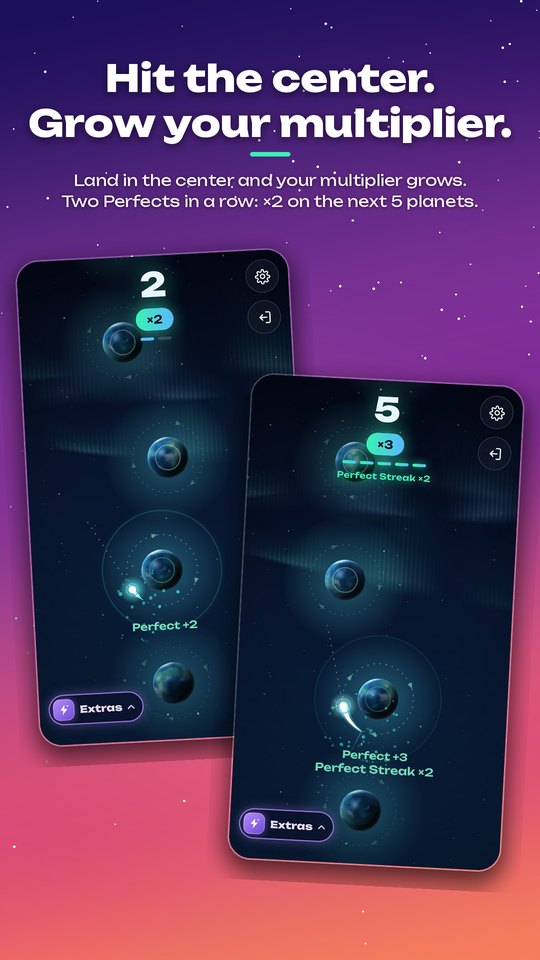
StarSling is a space game about perfect timing. Your star circles a planet, and one tap slings it off toward the next orbit. Hit the center to build your multiplier and find out how far you can go before a single mistake sends you drifting into the dark.
- Eighteen worlds. Four to start with and fourteen more along the way, each with its own twist.
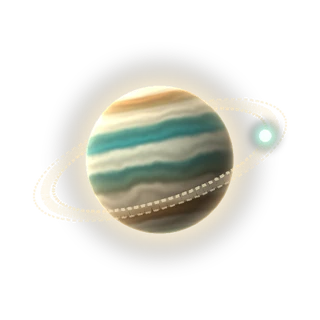
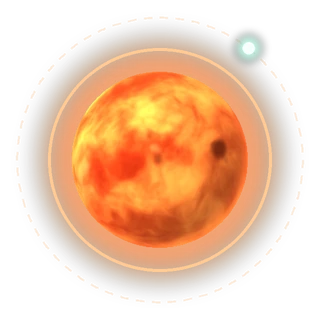
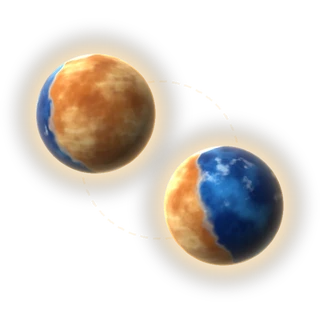
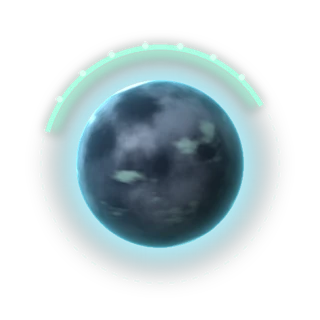
- Easy to learn, hard to master. Moving planets, golden crescents to bounce off, asteroids, jumping planets, moons, oval orbits, black holes, pulsar beams, ringed giants, red giants, twin planets, shields, storms, mirages that trade places, glass rocks, gates and tides keep raising the stakes.
- English, Spanish and Portuguese (Brazil and Portugal). StarSling starts in your phone’s language, and you can change it any time in Settings.
- Perfect Streak. Land 2 Perfects in a row and the next 5 planets score ×2.
- Orbit Jump. Tap +3 or +6 while you orbit and your star slings over the next three or six planets in one go.
- Cosmic Wheel. A free spin every day: tap STOP and win lives, Orbit Jumps, a wormhole safe, boosts, stardust or, now and then, a rare power-up.
- Power-ups. In a mission, for one life: Untouchable (nothing in the way can stop your star), Laser Focus (a laser shows where your star will fly) or Slow Orbit (everything at half speed while you orbit).
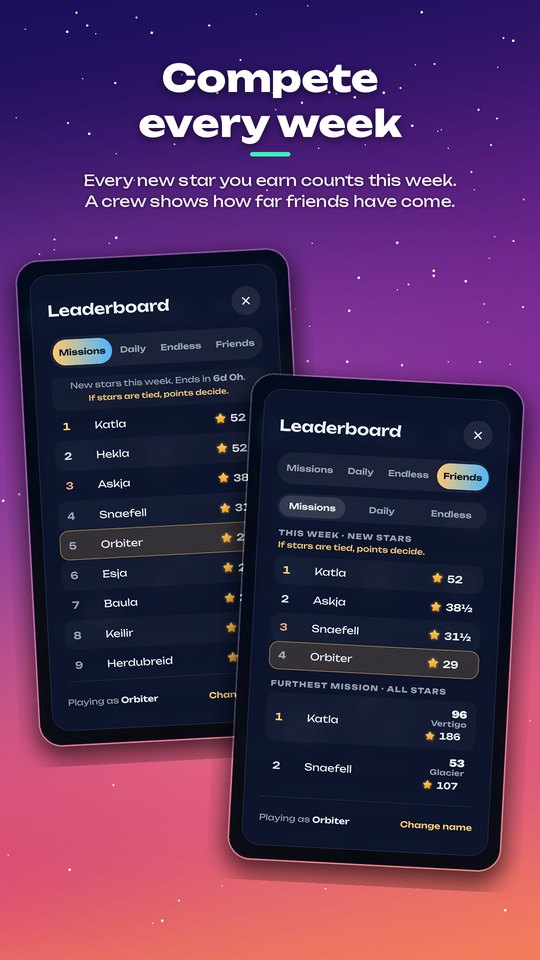
- Leaderboards. A weekly leaderboard of the new stars you earn in missions (if stars are tied, points decide), a daily challenge board, and the best scores in endless mode.
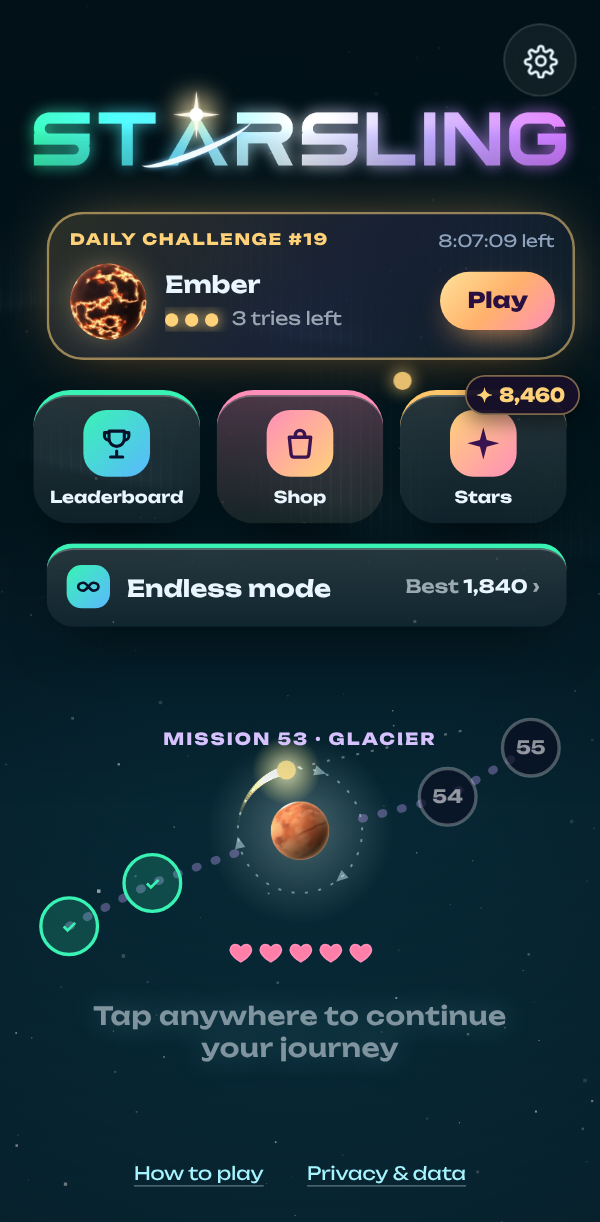
- Missions. A journey of 300 missions through eighteen worlds and six Convergences, the same for every player, with a fresh challenge at every stop. Your journey is right on the home screen, every life gives you three tries, checkpoints carry you through the longer missions, and the first ten missions use no lives at all.
- Crews. Start a private leaderboard with your friends: this week’s new stars, and how far everyone has come.
- Daily challenge. A new course every day in one of four daily worlds, the same for every player. The top 10 win stardust.
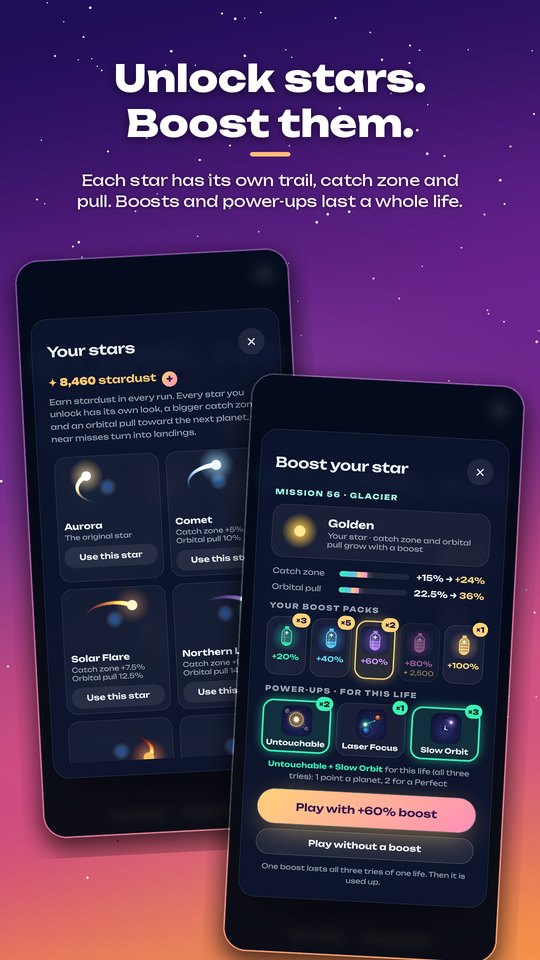
- Stars to unlock. Earn stardust in every run and spend it on stars with their own trails, a bigger catch zone and an orbital pull toward the next planet. Boost packs make both even bigger, in a mission for all three tries of a life.
- Wormhole safes. Missed? A wormhole safe opens in empty space and slings your star back to the last planet. In missions you can use one on each of a life’s three tries. You start with three, and when they run out you can get more or watch a short ad right there to keep going.
Missions
A journey of 300 missions.
Follow the aurora trail through space, one mission at a time. Your journey is on the home screen: the planet of your next mission, the missions behind you and the ones ahead. One tap opens the map right where you are. Every mission is handmade and fixed, so it looks exactly the same for every player, every time you play it. Finish one to unlock the next, and earn +25 ✦ for each mission you complete. Finish all 15 missions of a world for +1,000 ✦, two wormhole safes, two Orbit Jumps and a celebration to match.
Earn up to three stars a mission by winning on the first try, with high points and Perfect landings; each extra try costs half a star. Every new star counts on the weekly leaderboard, which starts over every Monday: the more new stars you earn each week, the higher you climb. If stars are tied, points decide.
There are 15 missions of 6 to 20 planets in each of the eighteen worlds, and each world brings its own twist. The gaps get longer, the orbits get faster and the planets get smaller as you go: the last mission of a world turns clearly faster than the first.
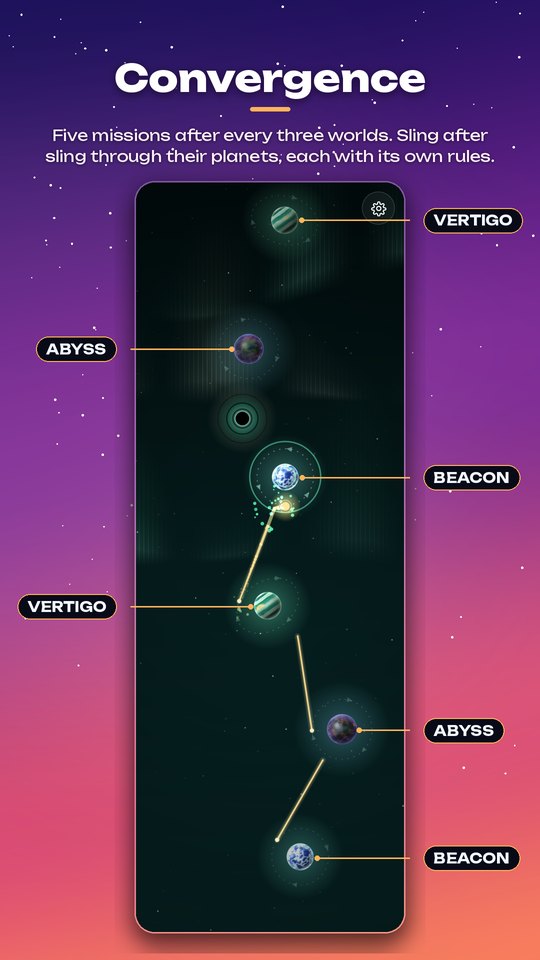
After every three worlds comes a Convergence: five missions that mix the planets of those three worlds, every planet with its own world’s rules and sky, so you never know what the next sling brings. Six Convergences, 30 missions, and five extra lives for finishing each one.
- Aurora1–15Longer gaps, faster orbits, stardust pearls
- Dusk16–30Moving planets and comets
- Echo31–45Bounce off golden crescents onto planets in their cradles
- Glacier46–60Blinking planets and asteroids
- Quanta61–75Planets that jump to their ghost when you launch
- Halcyon76–90Moons riding the orbits
- Vertigo91–105Oval orbits, fast and slow
- Abyss106–120Black holes you fly round to get in
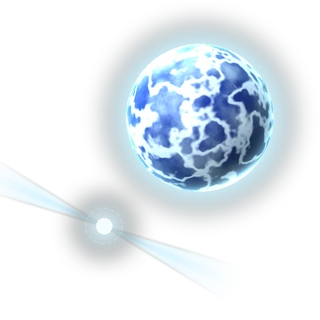
- Beacon121–135Pulsar beams sweeping the gaps
- Saturna136–150Fast rings that catch you too
- Nova151–165Red giants that swell and send waves of fire
- Equinox166–180Twin planets: only the lit one catches you
- Aegis181–195Shields over part of each planet
- Gyre196–210Orbits that turn back every lap
- Mirage211–225Planets that trade places with their mirage
- Prism226–240Glass rocks you only get past off the glass
- Nexus241–255Faded planets you reach only through a gate
- Tide256–270Orbits that grow and shrink
You have five lives in missions, and every life gives you three tries: fall and the mission starts again, or a wormhole safe takes you back to your planet. A new life comes back every 30 minutes, and missions 1–10 use no lives at all. In longer missions a planet with a green orbit is a checkpoint: reach it, and the next tries of that life start there. Every checkpoint also gives bonus points, and stardust the first time you reach it: the harder the world, the bigger the bonus. Win a mission and a heart you have started on is whole again. Want to keep playing? Endless mode is always open, with no limits at all, and the shop has five more lives, fifteen more plays, whenever you need them.
Eighteen worlds, eighteen twists
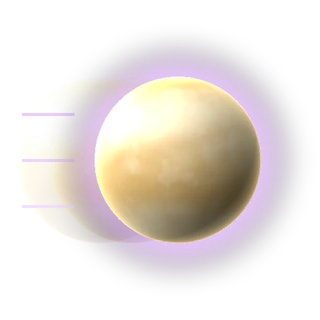
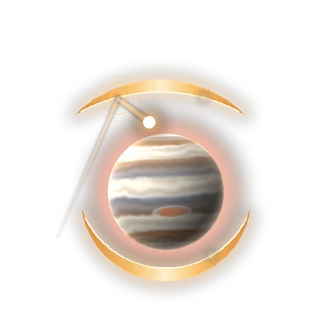
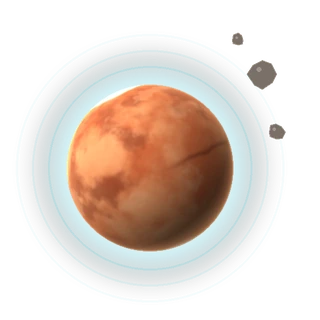
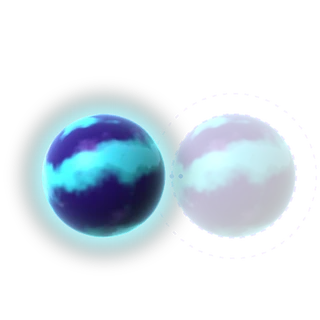
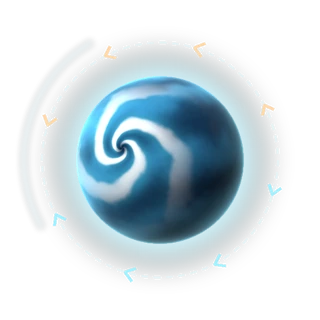
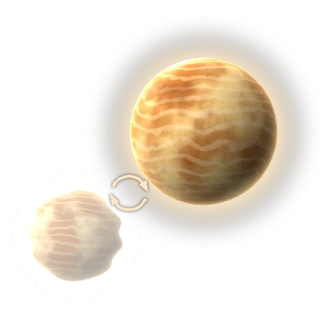
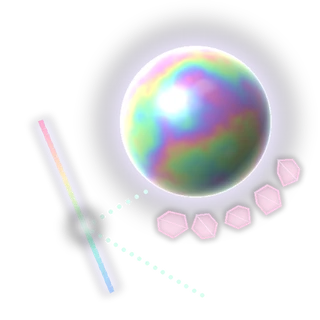
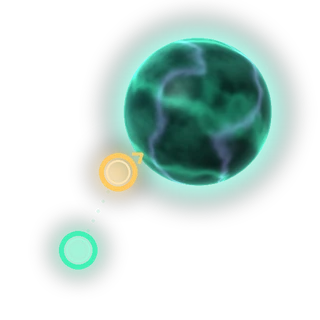
Missions take you through all eighteen worlds, 15 missions in each. In endless mode the world changes every 10 planets: Aurora first, then the other seventeen in a new random order every run, a little faster as you go. Each world changes how you play.
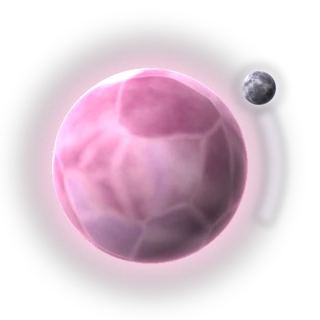
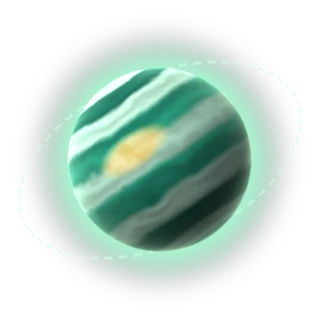
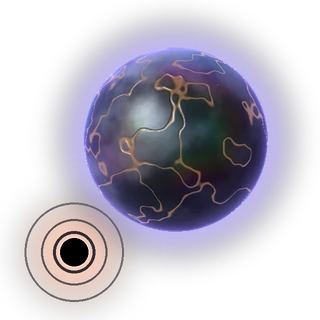
Ten more worlds
Play with friends
Start a crew. Settle the score.
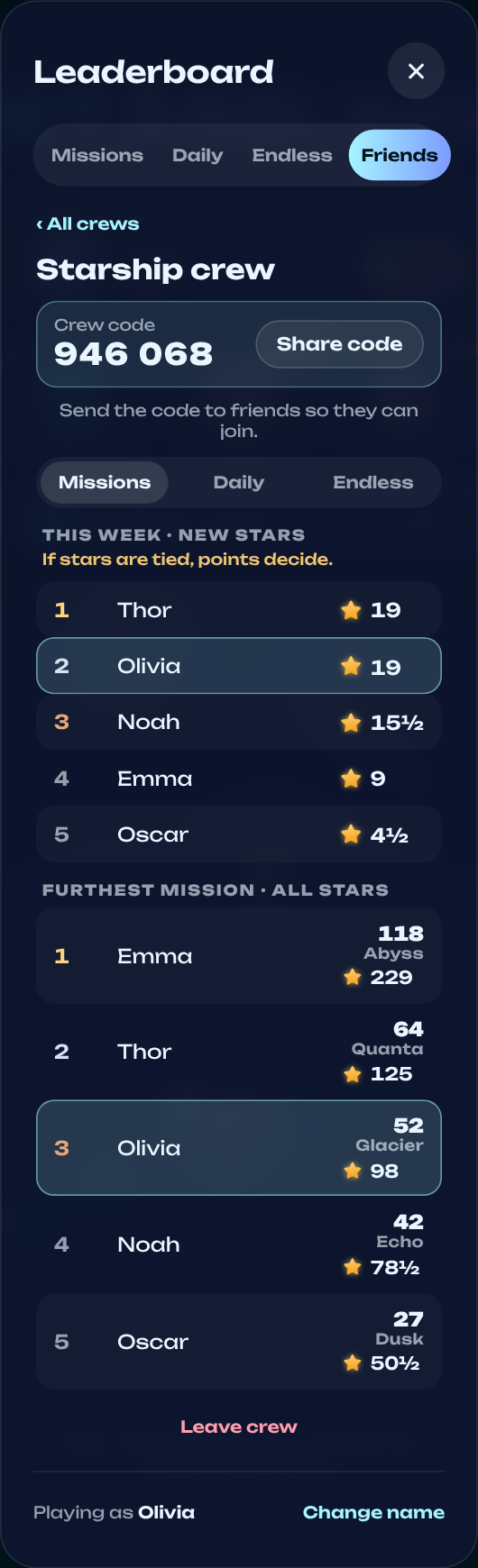
The world leaderboard is huge. Your crew is personal. Make a private leaderboard for your friends, your family or the whole office: this week’s new stars at the top, and below them how far everyone has come in the missions and all the stars they have earned.
Suddenly one more try isn’t about a world record anymore. It’s about knocking your brother off the top spot before dinner, or finally passing the colleague who is always one world ahead of you.
- Create a crew and give it a name everyone will recognise.
- Share the crew code with one tap, straight to Messenger, WhatsApp or a text.
- Race to the top. Every new star you earn counts on the crew board automatically, and so does how far you get, with nothing else to set up.
Up to 50 players in a crew, and you can be in up to 10 crews at once.
Daily challenge
One course. Every player. Every day.
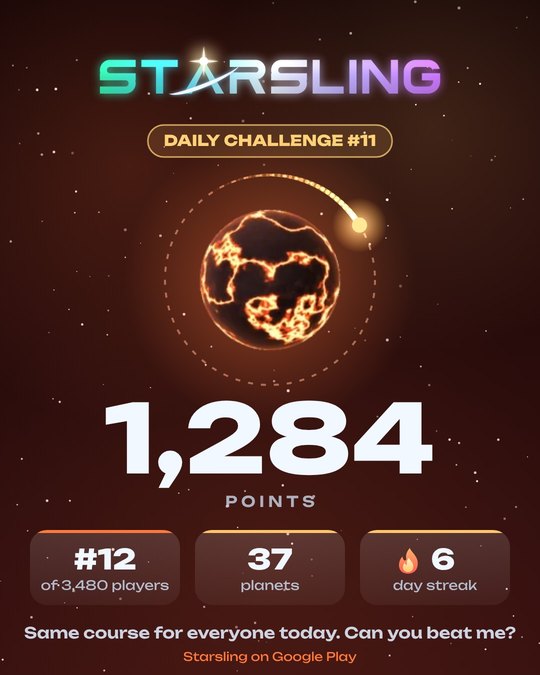
Every day at midnight (UTC) a brand-new course appears in one of four daily worlds you’ll never see in the main game, and it’s the same for every player on Earth: the same planets, in the same places, with the same dangers. You get three tries, and only your best one counts.
In the daily challenge every star has the same catch zone, so it all comes down to timing and nerve. Finish in the top 10 and you win stardust when the day ends:
- #1 500 ✦
- #2 350 ✦
- #3 200 ✦
- #4 150 ✦
- #5 100 ✦
- #6–10 75 ✦
Play every day to build a daily streak 🔥. Every day of your streak adds +25 ✦ to your stardust bank. Then share your result with one tap and dare your friends to beat you on the very same course.
Four daily worlds, four dangers
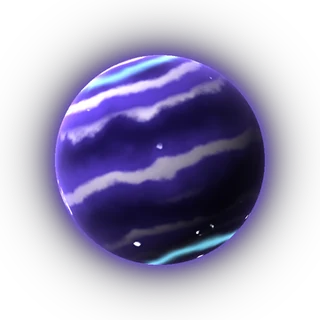
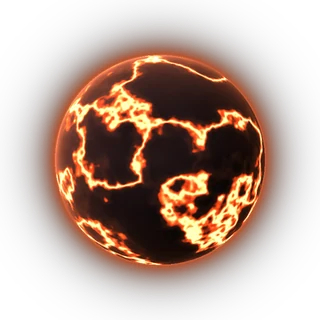
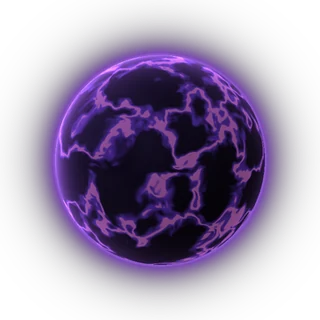
The worlds take turns, one per day. Each has a danger you won’t find anywhere else in StarSling.
Stardust and stars
Collect stardust. Unlock stars.
Every run fills your stardust bank, even the ones that end too soon. Spend it on stars, each with its own trail, its own sparks, a bigger catch zone and an orbital pull toward the next planet, so the landings you would have just missed start turning into saves. Save up for your favourite or collect them all, and for a hard mission add a boost pack: up to twice the catch zone and pull, for all three tries of a life in a mission or a whole run in endless mode. It’s your stardust, and your choice.
- +1 ✦ every planet
- +2 ✦ every Perfect
- +5 ✦ Perfect Streak
- +3 ✦ near miss
- +20 ✦ new high score
- +25 ✦ every mission
- +1,000 ✦ every world
Sixteen stars in all, from the free Aurora to Event Horizon: a black hole with a glowing disk, the biggest catch zone and the strongest pull in the game, and the star every serious player is saving for.